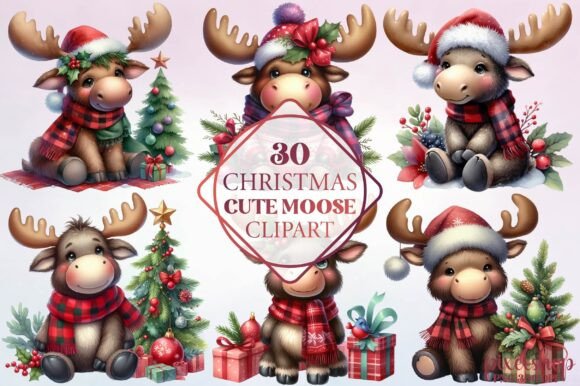
Watercolor Christmas Cute Moose Clipart
When I first pulled up Watercolor Christmas Cute Moose Clipart on my monitor, I didn’t just see a file; I saw a potential bestseller. As someone who has spent years evaluating digital assets for real-world embroidery applications, I know that the difference between a "nice" design and a profitable one often comes down to how well it translates from screen to stitch. This particular illustration strikes a balance that is increasingly rare in the holiday season: it captures the whimsical charm of winter without sacrificing the structural integrity needed for machine embroidery.
The mood here is immediate. It isn’t the stark, high-contrast graphic style that dominates fast fashion, nor is it the overly complex, painterly detail that often gets lost in thread. Instead, it offers a soft, inviting aesthetic that feels perfect for boutique handmade products. For designers looking to add a touch of rustic elegance to their holiday embroidery collections, this asset provides a strong foundation. It feels like a design that belongs on a cozy knit sweater or a sturdy canvas tote, rather than a delicate silk scarf where fine details might fray.
First Impressions and Visual Personality
The visual personality of this clipart is distinctively warm. The watercolor effect suggests a hand-painted origin, which adds significant perceived value to any handmade product. When customers buy embroidered goods, they are often looking for that artisanal feel—the idea that a human being curated and created something special. This design delivers that impression right out of the gate.
From a layout perspective, the composition is clean. There is enough negative space around the moose figure to allow for effective digitizing. This is crucial because it gives the digitizer room to decide on stitch direction and density without feeling cramped. The theme is unmistakably festive but not cliché. By choosing a moose, you are tapping into the popular "cabin core" and rustic winter trends that have been dominating home decor and apparel markets for several seasons now. It appeals to a demographic that values nature, warmth, and traditional holiday cheer over modern minimalism.
Real-World Application: The Tote Bag Test
To truly understand if a design works, I always imagine it on a specific product. Let’s take a realistic scenario: preparing a custom embroidered tote bag design for an upcoming craft fair or an Etsy listing. Imagine a natural, unbleached cotton canvas tote. You place the Watercolor Christmas Cute Moose Clipart centered on the front panel. The contrast between the earthy tone of the fabric and the vibrant, yet soft, colors of the watercolor moose creates an instant focal point.
This setup works beautifully because the design is versatile enough to stand alone as a statement piece. It doesn’t need excessive lettering to make its point. However, if you were to pair it with a phrase like "Merry & Bright" or "Winter Wonderland," the balance remains intact. The moose acts as the anchor, allowing the typography to support rather than compete. This is a key insight for Etsy sellers and small shop owners: designs that can function both independently and as part of a larger composition offer more flexibility in marketing and product creation.
I also envision this on a sweatshirt embroidery project. A cream or light grey heathered sweatshirt would enhance the watercolor tones, making the colors pop without appearing garish. The moose’s friendly expression makes it particularly suitable for baby embroidery items, such as burp cloths or onesies, where the softness of the watercolor style aligns perfectly with the gentle nature of the target audience.
Where Caution Is Required
While the design has strong merits, no digital asset is flawless for every application. There are specific scenarios where Watercolor Christmas Cute Moose Clipart requires careful handling. First, consider the stitch density. If the original artwork contains very fine, intricate lines intended to show subtle color gradients, these may not translate well when converted into thread. Fine details can become muddy or break apart during the stitching process, especially on textured fabrics like terry cloth or heavy denim.
Furthermore, avoid using this design for embroidered patch applications on dark fabric unless you are using a substantial backing or applique technique. The watercolor style relies on lightness and airiness, which can get lost against dark backgrounds. Additionally, be mindful of hoop size limitations. If you attempt to scale this design too large, you may encounter issues with thread tension or needle breaks due to increased stitch count. Conversely, scaling it down too small risks losing the character of the moose’s face, which is likely the emotional hook of the design.
Another area to watch is curved surfaces like caps or hats. While possible, the distortion inherent in embroidering on a curved brim or crown can stretch the watercolor elements, potentially warping the intended shape. For these projects, a simpler, more geometric design might yield a cleaner result.
Technical Considerations for Designers
Before committing to production, there are several practical steps every machine embroidery design creator should take. Always test the design on scrap fabric that matches your final product in weight and texture. This helps you assess how the thread colors interact with the material. Do the blues of the watercolor background clash with the fabric? Does the red of the holiday accents appear dull?
It is also wise to inspect the design in black and white. This grayscale check reveals whether the design has sufficient contrast to remain legible once stitched. If the tonal values are too similar, the finished product may look flat or indistinct. Review the stitch density closely—ensure that fill stitch areas are not so dense that the fabric puffs up excessively, nor so sparse that the base material shows through unevenly. Using the proper stabilizer is non-negotiable; a flimsy stabilizer will lead to puckering, which ruins the professional appearance of even the best designs.
For those selling digital files, confirm that the digital embroidery file includes all necessary formats for various machines. If you are creating physical goods, ensure you have the correct licensing rights. Many clipart packages come with restrictions on commercial use, especially for unlimited merchandise sales. Verify these terms before listing your craft business items on platforms like Amazon Handmade or Shopify.
Final Verdict on Value and Appeal
In conclusion, Watercolor Christmas Cute Moose Clipart is a strong candidate for designers seeking to add warmth and whimsy to their holiday offerings. Its visual appeal lies in its ability to evoke emotion—a sense of nostalgia and comfort—that resonates with buyers looking for meaningful gifts. Whether used for personalized gifts, commercial embroidery projects, or design assets for digital planners, the moose brings a consistent brand identity that feels approachable and professional.
The design enhances buyer engagement by offering a unique alternative to traditional Santa or reindeer motifs. It stands out in a crowded marketplace while still fitting comfortably within seasonal expectations. For apparel decorators and creative entrepreneurs, this clipart represents a low-risk, high-reward addition to their portfolio. It allows for creativity in execution—from choosing varied thread palettes to experimenting with different fabric textures—while providing a reliable, attractive core image.
Ultimately, success in the handmade market depends on quality and presentation. By treating this clipart with the respect it deserves—testing thoroughly, digitizing carefully, and selecting appropriate materials—you can transform a simple digital illustration into a cherished finished product. The moose is cute, yes, but it is also a smart business choice for anyone looking to capture the spirit of the holidays with grace and style.